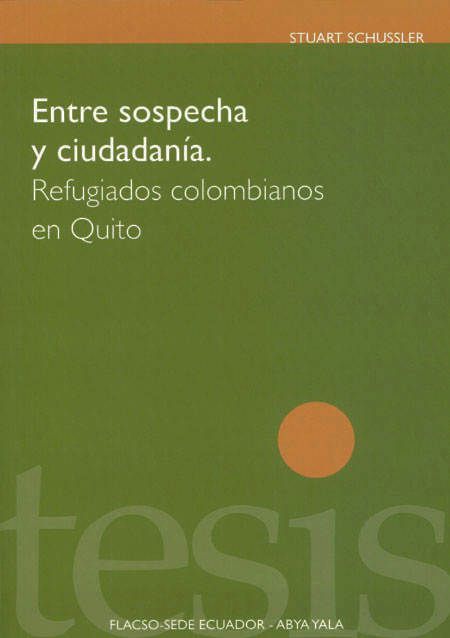
Entre la sospecha y la ciudadanía: Refugiados colombianos en Quito

my master’s thesis at FLACSO- Ecuador
published by Abya Yala in 2009
Ser perseguido, estar en un país ajeno, no tener ni estatus legal ni derechos prácticos: eso es estar entre la sospecha y la ciudadanía. Es la zona gris, la marginalidad de una falta de estatus, el limbo legal. Es un espacio de inestabilidad y miedo, donde uno siempre está reaccionando y sólo difícilmente se pueden llevar a cabo planes para su futuro. No puede avanzar en la carrera que practicó antes ni se puede volver a estudiar para abrirse nuevos horizontes. Si se ve a un policía en la calle viene el miedo, no importa qué argumentos se le ofrece, la poca estabilidad que se ha logrado puede desvanecerse inmediatamente. Apenas puede construir algo para sí mismo y su familia. Apenas puede encontrar un verdadero refugio y hacer que la carga de vulnerabilidad creada por el desplazamiento no pase a sus hijos.

Sin embargo, este espacio entre la sospecha y la ciudadanía también es un espacio de resistencia y génesis. Enfrentando al Estado que está dispuesto a negarle el acceso a la comunidad política y sin poder volver a su país, el refugiado colombiano es testigo de la cara escondida del Estado y su violencia más cruda y elemental: el poder de exclusión ligado a la palabra soberanía. Frente a una situación en que no puede ni volver ni quedarse, los refugiados inventan nuevas maneras para sobrevivir. Forman lazos solidarios con organizaciones no-gubernamentales (ONG) y otros grupos a que les han sido negados sus derechos humanos; levantan sus voces en una denuncia colectiva; su comunidad mantiene anónimos a los que no pueden arriesgarse a denunciar individualmente; utilizan su inclusión en una sociedad disidente para apresurar su inclusión legal; acceden a derechos ciudadanos desde la informalidad. Reaccionando a una vulnerabilidad que empezó con su desplazamiento y creció con la falta de derechos prácticos, los refugiados construyen estrategias para sobrevivir que son aplicables a todos los que denuncian violaciones de derechos humanos sin ser escuchados, todos los que quieren ir más allá de los derechos formales y construir un empoderamiento práctico, todos los que se encuentran excluidos hasta que dicen: “Ya basta; yo merezco más”.

A lo largo de este estudio, se explica en qué consiste esta vulnerabilidad del espacio entre la sospecha y la ciudadanía, por qué y cómo toma cuerpo y cómo los refugiados están resistiendo su exclusión a través de la construcción de una ciudadanía desde la informalidad. Comenzamos este estudio al preguntar lo siguiente: Dada la vulnerabilidad de la mayoría de refugiados, ¿cómo y por qué es que el Estado aumenta esta vulnerabilidad y qué están haciendo los refugiados para resistir?

Ver el libro completo aquí
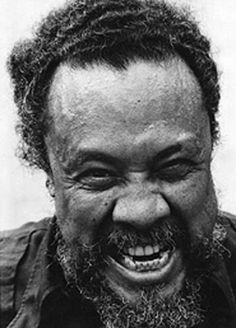
Essays on Mingus, Marcos and mining

Written in 2015 for a grad school application I never submitted

Describe one of your own creative works and what you accomplished with it – then become your own critic and find out what you could have done better.

On the western slopes of Ecuador’s Andes, halfway between the coast and the sierra, is a region of cloud forest called Intag. It’s where ocean moisture kisses the forest and condenses into fog, where Ice Age glaciers pushed an amazing diversity of species, and where Afro-Ecuadorian and mestizo peasants arrived on foot and with mule trains in the 1960s to farm. It’s also where copper, gold, and uranium deposits lie below the lush mountains, attracting mining companies from the world over.

Continue reading “Essays on Mingus, Marcos and mining”

Paths from the caracol- A report on interviews with study abroad alumni

Prepared by Stuart Schussler, March 2017
on behalf of the Autonomous University of Social Movements
(otherwise known as MSN)

Anti-Executive Summary
The quick-and-dirty of the report

August 2012: The team at Mexico Solidarity Network begins discussing comprehensively engaging our alumni.

June 2015: Survey of alumni, where you’re living, and what you’ve been up to. 165 people respond.

February – September 2016: Conversations with alumni about what you’ve been up to and how the program impacted you. Stuart talks with 104 people.

That’s a brief history of how a seed of curiosity, sprouting five years ago, has grown. All of us have seen the power and beauty of autonomy, and we’re all asking what it means for us here, now, thousands of miles from the caracol, in deeply troubling times. These are times of war – war on Black lives, war on indigenous water protectors, war on immigrants, war on women and queer people, war by the largest and most violent military in world history, war by the capitalists who are both finance and government – and we need all the strength we can muster to weather the storm. Those of us who have glimpsed autonomy have seen hope. We know that as community, from below and from the left, we can win. And hopefully the alumni network can be a resource in this struggle.

Continue reading “Paths from the caracol- A report on interviews with study abroad alumni”

Workers and Capital by Mario Tronti

written in 1962 and published in English in 2019 by Verso
notes written in 2017 for a grad school comprehensive paper on autonomy

Beginning from the premise of labor’s primacy over capital, Tronti analyzes the labor process, class struggle, and wider society through this lens. It culminates in the strategy of refusal, to be organized by the party. Tronti begins with his key inversion of Marx: we can’t start with understanding capital as a way to understand the working class. Instead, the working class is the party with all the power, causing capital to continuously transform its methods of exploitation and to organize all of society outside the factory so that it may control labor inside it.

Continue reading “Workers and Capital by Mario Tronti”

The Arcane of Reproduction: Housework, Prostitution, Labor and Capital by Leopoldina Fortunati

published in 1981, in English in 1995 by Autonomedia
notes written in 2017 for a grad school comprehensive paper on autonomy

Fortunati adds a gendered analysis of reproduction to the Marxist understanding of capitalism. She re-formulates the concepts of production, use and exchange value, and variable capital/labor-power, observing them from the perspective of reproduction, and she elaborates a theory of reproduction that is totally absent in Marx. This core of her theory of reproduction is that it’s the sine qua non of all capitalism since there is no capitalism without labor-power, yet capital ‘naturalizes’ reproduction and is therefore able to benefit from labor-power without paying for it. Women ‘freely’ exchange their unwaged, un-valued reproductive labor for a share in male wages, thereby passing along to the capitalist a second non-equivalent exchange, alongside the commodities-for-wages exchange, and further increasing surplus value accumulation. This comparison of productive and reproductive labor allows Fortunati to deepen a number of Marxist concepts, including our very understandings of class and class struggle. Most importantly, we learn that capital must internally divide labor if it’s to successfully undervalue reproduction.

Continue reading “The Arcane of Reproduction: Housework, Prostitution, Labor and Capital by Leopoldina Fortunati”

No Shortcuts: Organizing for Power in the New Gilded Age by Jane McAlevey

published in 2016 by Oxford University Press
notes written in 2017 in preparation for a grad school comprehensive paper on social movements

McAlevey makes the argument that labor has been on the decline because it has chosen mobilizing over organizing, thereby separating labor from community and social movement organizations. She takes us through a union history, from her favorite progenitor, the CIO, through the treason of Alinsky and to today’s ‘New Labor,’ and also outlines a theory of power and specific organizing steps that can return us to the CIO’s organizing model. Her key distinction between organizing and mobilizing gives theoretical arguments about NGOs, class formation, and the difference between new and old social movements some concrete, practical teeth. It’s a great example of strategic, praxis-based writing.

Continue reading “No Shortcuts: Organizing for Power in the New Gilded Age by Jane McAlevey”

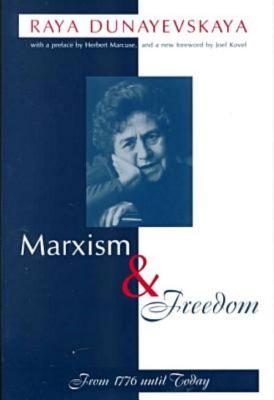
Marxism and Freedom from 1776 until Today by Raya Dunayevskaya

published in 1975 by Pluto Press
notes written in 2017 for a grad school comprehensive paper on social movements

Dunayevskaya argues for the primacy of ‘the self-activity of the masses,’ making this the root of her humanist philosophy, her understanding of key Marxist concepts (and the method by which these key concepts were elaborated), and her reading of Marxist and Soviet history. It’s a dialectical theory and method that puts working people at the center and, in doing so, heavily critiques bureaucracy, state capitalism, and vanguardism.

Continue reading “Marxism and Freedom from 1776 until Today by Raya Dunayevskaya”

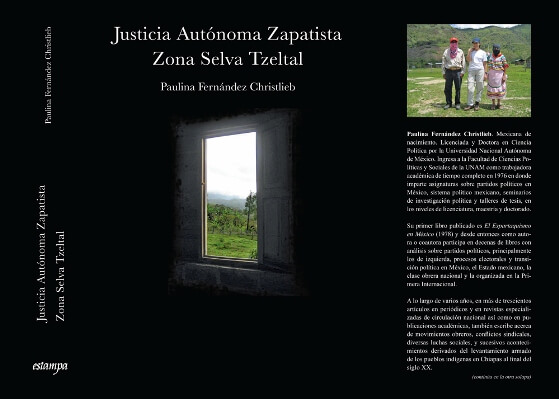
Justicia Autonoma Zapatista by Paula Fernandez

published in 2014 by Estampa
notes written in 2017 for a grad school comprehensive paper on autonomy

Using extensive quotations from primary source interviews, Fernandez explains Zapatista justice in its widest sense, as a practice fundamentally rooted in the collective ownership and work on the land and a practice that is tied to all aspects of autonomy. This is the message repeated throughout the text: the official justice is money and autonomous justice is collective work on collective land. She begins with testimony contrasting current justice and autonomy to slavery and coercion before the uprising; she then situates the fundamental change in the land; she explains self-government and cargos, emphasizing the collective approach; she then (and only after these important explanations) describes the justice system in more detail; and finally mentions its current limitations and how justice-as-education is central to continuing to transcend obstacles.

Continue reading “Justicia Autonoma Zapatista by Paula Fernandez”

Gramsci’s Politics, by Anne Showstack Sassoon

published in 1980 by St. Martin’s Press
notes written for a grad school comprehensive paper on social movements

Sassoon carries out a close analysis of Gramsci’s notebooks to synthesize his thinking on the party, the nature of the hegemony it’s up against, what revolution should look like, and how the party can be a tool to get there. Gramsci’s end-goal is always a new state of non-capitalist social relations, allowing politics to be infused in all of society so that there is no longer a division between leaders and led. He then works backwards to detail important aspects of the party structure and series of tasks necessary to achieve this vision.

Continue reading “Gramsci’s Politics, by Anne Showstack Sassoon”

Thinking Through: Essays on Feminism, Marxism, and Anti-Racism by Himani Bannerji

published in 1995 by Women’s Press
notes written for a grad school comprehensive paper on social movements

This is bound to be your definitive reference on questions of revolutionary subjectivity, identity, and the praxis of thinking about these things to make social change. It’s extremely theoretically rich, as she re-orients the identity discussion towards concepts of experience, difference, social relations, relations of ruling, and subjectivity. The analysis dialectically brings together Foucauldian cultural, knowledge/power thinking with Marxist thinking on revolution and social class. In doing so, it’s a prime example of how to carry out a dialectical analysis. In fact, it’s a case study of dialectics as applied to identity. (And for this reason it’s quite hard to summarize, so you’ll probably still need to go back to the notes.)

Continue reading “Thinking Through: Essays on Feminism, Marxism, and Anti-Racism by Himani Bannerji”