Written in 2015 for a grad school application I never submitted
Describe one of your own creative works and what you accomplished with it – then become your own critic and find out what you could have done better.
On the western slopes of Ecuador’s Andes, halfway between the coast and the sierra, is a region of cloud forest called Intag. It’s where ocean moisture kisses the forest and condenses into fog, where Ice Age glaciers pushed an amazing diversity of species, and where Afro-Ecuadorian and mestizo peasants arrived on foot and with mule trains in the 1960s to farm. It’s also where copper, gold, and uranium deposits lie below the lush mountains, attracting mining companies from the world over.
I came to Ecuador as a Fulbright Scholar in 2006 and participated in a human rights observation program in Intag before and during my grant period. At the time a Canadian mining company named Ascendant Copper was seeking local support and government permits for a proposed open-pit mine. In the effort to keep their idyllic farms and forests from being made into sludge pools, Intag residents had established the human rights observation program to document the company’s attempts to invade their ecological reserve and pit their communities against each other.
One day in December 2006 a paramilitary group arrived in Intag. Ascendant Copper said they were “organic farmers” looking to break land in the ecological reserve, but they arrived with teargas, bulletproof vests, and shotguns. Along with fellow observers, I caught the melee and subsequent disarming and “citizen’s arrest” of the paramilitaries on camera and film, we widely distributed our denouncement, and the documentation won the revocation of Ascendant Copper’s mining concession. Our “media production” involved many wobbly shots, bad lighting, and even worse sound quality. But thanks to a few important seconds of footage we kicked Ascendant out and helped save countless species from extinction and countless families from displacement. No small feat for a few seconds of video and some stills.
However, before we could leave Intag and distribute our damning footage in Quito, a tense exchange occurred that was indicative of a larger problem. I was hurrying to leave for the city when a community member walked up and snatched the video tapes out of my hand so that everyone could review my footage before I left. “Why would they think they can grab my things like that? Don’t they know I’m not going to let out anything that could hurt them?” I asked myself, incensed. But I just as easily could have asked why they would ever trust the judgment of someone who appeared one day proclaiming his solidarity, was pretty useless with any other tool than a video camera, and now wanted to get back to the metropolis so quickly, probably so he could win personal recognition for what had been a broad community effort.
The critique and lesson are that people of privilege trying to work with the oppressed will very reasonably be denied the benefit of the doubt at first, trust takes longer to build than our accelerated urban culture is comfortable with, and that acceptance is built by prioritizing responsibility towards the group over personal recognition. In my later work building community around immigrant rights, eviction defense, and adult education, we’ve had our moments of fame and recognition, but this is a bad measure of community organizing. Rather, just as the making of media is as important as the product itself, we judge ourselves by the quality of our group process and we make the road by walking.
Name the artist you found most intriguing and justify your choice
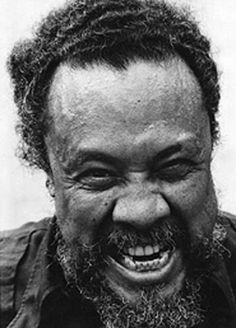
As a young jazz trumpet player, my teachers proclaimed the rapid, methodical bebop of Charlie Parker and brooding, tonal post-bop of Miles Davis to be the pinnacle of jazz music. When I blindly followed a music store employee’s advice to buy Charles Mingus’s “Blues and Roots” (1960) and heard its disorienting complexity, I asked for my money back. I was rejected, forced to keep the CD, and instead listened to it again and again until I could understand why anyone would recommend such a cacophony. Twenty years later, I see Charles Mingus as a jazz visionary whose assembling of voices creates an emotional vibration that is greater than the sum of its parts. In moving past formulaic jazz structure, his music is emblematic of the transition from a print to electronic age.
When I was studying jazz improvisation in university, the traditional song structure of melody-solos-melody was the rule, as it was in Mingus’s day. We would all play through the melody together, each of the five or six players would display their individual talents in turn by soloing over the melody’s chord structure, and we’d end playing the melody again. Comparing that simple structure to the songs on “Blues and Roots” is like comparing your average soap opera to One Hundred Years of Solitude. In Mingus’s album, one instrument will repeat a simple melody, another will layer a different riff on top of it, a third will solo above the two melodies, Charles Mingus chants as he plays the bass, and the entire assembly will at times drop to near silence, only to build again to a fever pitch. The opening track “Wednesday Night Prayer Meeting” is exemplary of the musical approach, as some instruments chant repeated phrases, others spout rapturous exhalations, and others moan as if possessed by the spirit.
Charles Mingus did more than increase the compositional complexity of jazz music. He made a spontaneous, social art form even more so by reaching into the well of gospel and spiritual music. With its roots in the dongs of field slaves, American gospel allowed its singers to become collectively empowered agents, as co-composers and co-creators of beauty. This power-through-collective-creation is lost in more rigid jazz music, as most of the song is spent showcasing individual soloists’ improvisational talents. With Mingus, melody and improvisation are layered on top of one another. They’re made fluid so that all members of the collective move in and out between lead and supporting roles. Moreover, the distinctions between solo, background, and rhythm section play are blurred away, leaving a group improvisation where all members build in intensity and emotional complexity in dialogue with each other. With Mingus, we move from expository to dialogic jazz, from a music of the print age defined by mechanics, soliloquy, and syntax to a music of the electronic age that is an organic, collective mosaic.
Name your favored theorist and elaborate on one text you found most intriguing
In his speech “Between Light and Shadow,” delivered May 24, 2014 at the funeral of Compañero Galeano, the Zapatistas’ Subcomandante Marcos presents a masterpiece of postmodern political tactics, of revolutionary ethics, and of the strategy of building autonomy. In a mockery of the cult of individualism, the Zapatistas proclaim Marcos was a clown, a cliché, a ruse created to fool politicians and the media while indigenous communities silently advanced their work of building autonomy.
We all know Subcomandante Marcos: the one and only Zapatista spokesman, wearing a ski-mask, lighter-skinned than his fellow indigenous guerrillas, writing witty fables and children’s stories on the ills of neoliberalism. The height of his cult of personality came during the 2005 Other Campaign. In it, Marcos embarked on a nation-wide listening tour (in “otherly” opposition to the concurrent presidential campaign) and met both with popular movements across Mexico fighting to form an “other” anticapitalist and antielectoral politics and with mobs of fans looking for a photo. After the Other Campaign came a period of silence between 2006 and 2012. Rumors abounded that Marcos was sick and dying and that the entire Zapatista movement was also in decline. Such gossip was proven false on December 21, 2012 when tens of thousands of unarmed Zapatistas marched in complete silence into the same towns that only thousands of armed guerrillas had occupied in 1994. The movement had multiplied, and it announced its new aperture towards the outside world by inviting nearly five thousand national and international allies to spend a week learning about autonomy by living with indigenous Zapatista families. One thousand, five hundred newly sworn-in Zapatista spokespeople would be their guides. In retaliation, a government-backed paramilitary group burnt a Zapatista autonomous clinic and school and killed Compañero Galeano, a man who had participated in both the 1994 uprising and Zapatista autonomous self-government. Marcos reads “Between Light and Shadow” at Galeano’s funeral and declares the personality of Marcos is dead and that Galeano has been resurrected.
Explaining how the persona of Subcomandante Marcos was nothing but a political tactic of distraction, he says that you must create a weapon and convince your enemy of its effectiveness, only for them to find the weapon was an illusion once they pull the trigger. Marcos was that weapon. While the Mexican military, government, and corporate media spent time and energy seeking to counteract the cult of personality around the whitest, “most articulate” Zapatista by attempting to capture him, discover his true identity, or discredit him, the indigenous communities of Chiapas were silently building self-government, a bilingual, self-sustaining education system, hundreds of medical clinics, and were working the land they had recuperated in the 1994 uprising. Instead of relying on Marcos to be their spokesperson, they had trained thousands more, all of them educated wholly within the Zapatista education system. And instead of attacking the Zapatistas’ leader, the government had been wasting its time on a simulation.
Marcos’ personality made use of the cult of individualism as a ruse. He convinced us he existed, above and apart from the indigenous movement he spoke for, when the truth is that the individual Marcos was a collective invention of the Zapatista communities. Seeing the individual dialectically – not as an isolated personality, but was something inseparable from the context that created it and its role within that context – Marcos was created as a tactical measure within a revolutionary struggle, and his creators chose to destroy him once he fulfilled that function. Greater than his individuality is the flow of collective liberation.
More than an admission of tactics, “Between Light and Shadow” is also a statement of revolutionary ethics. The hegemonic morality of modernity prioritizes the individual, their individual rights, and their individual market preferences, tastes, and opinions. In opposition to liberalism’s worship of individuality, “the good” is described by Marcos as the 1994 uprising’s goals of liberty, democracy, and justice – things that can only be won by collectively working for revolutionary, structural change. Symbolically, the personality of Marcos is killed and resurrected as Galeano to show that the fallen comrade lives on through the collective, autonomous projects he helped create. Practically, Marcos explains that none of the Zapatsitas’ success would have been possible if guerrilla fighters had not taken up arms for twelve days and died at the hands of the Mexican military during the 1994 uprising. Just as the personality of Marcos must die for a collective resurrection of Galeano, the revolutionary ethics calls for every humanist to take real, practical steps prioritizing collective liberation over individual gain.
Finally, “Between Light and Shadow” illuminates the strategy of autonomy. If tactics are situational, utilitarian moves and counter-moves made in pursuit of a greater goal, guided by an ethical commitment to collective liberation, strategies are the big goals, the living manifestation of ethical principles. For the Zapatistas, the strategic goal is autonomy: the self-production of community and everything it needs to thrive. We can read the death of Marcos and resurrection of Galeano within the larger arc of Zapatista autonomy and how they are pursuing this strategy. Whereas the personality of Marcos served the immediate end of providing a spokesperson while the movement lacked spokespeople and providing a ruse while the movement needed to buy time, before his murder Galeano was working with thousands of others to build the long-term, strategic, autonomous solutions to these needs. They built an autonomous education system that has trained thousands of teachers, and a participatory, consensual, indigenous self-government in which Galeano himself participated. No longer was a single spokesman necessary, as the movement can now collectively speak for itself. No longer is it necessary to distract the government and military, as autonomy is in full bloom. Marcos’ text is a look into the logic, progression, and principles of the Zapatistas’ theory of autonomy, and its lessons are applicable to communities everywhere building autonomy themselves.
 Stuart Schussler